
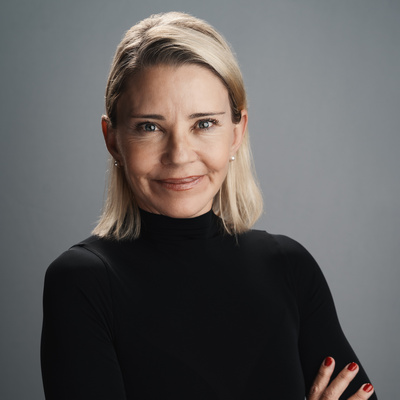
Zoë Harries
Zoë Harries is a senior executive and founder with over 30 years of experience driving investment growth and catalyzing high-value FDI for government-backed Special Economic Zones and large-scale economic development projects across the GCC, APAC, and Europe.
Founder of Impact Zones, a global SEZ and FDI advisory consortium, Zoë has delivered investor attraction models, ESG frameworks, and competitiveness tools across developed and emerging markets - with landmark projects spanning UAE, Saudi Arabia, Jordan, Iceland, Finland, India and Nigeria. Her work has contributed to a cumulative portfolio exceeding USD 100 billion in GDP impact and USD 30 billion in catalysed FDI.
Her executive career includes leadership roles at the Public Investment Fund (PIF) projects in Saudi Arabia, Masdar City Free Zone in Abu Dhabi, and the World Free Zones Organization in Dubai, where she played a central role in launching new zones aligned with Saudi Vision 2030.
Currently leading a multi-billion USD, next-generation SEZ project in Southeast Asia, Zoë structures complex public-private partnerships with sovereign governments and positions emerging markets for long-term investment.
A long-standing ESG advocate, she speaks internationally on SEZ competitiveness, sustainable FDI, and the future of economic zones.
"ESG as FDI Competitiveness Architecture: The International Perspective"
ESG has been sold as a compliance instrument. From where international capital sits today, it is actually a location and investment strategy, and the reframe has consequences for how countries and cities compete for FDI.
Where capital is going: A grounding in current global FDI flows, the dominance of digital infrastructure investment, the scale of capital commitments per project, and what the most sophisticated institutional investors are actually selecting for.
The three ruptures: Geopolitical fragmentation, the AI-driven technology wave, the climate and energy transition, and the direct investment consequences of each for location competitiveness.
The SEZ as proof of concept: Drawing on my own experience designing greenfield investment zones, the new zone proposition is built on people, natural resources as infrastructure, and governance as the basis of investor trust — not on tax holidays. These are ESG pillars by another name.
Greece - the specific opportunity: I have spent the last two decades of my professional life building special economic zones from scratch. And I want to say something that might surprise this audience: Greece does not need to build a special economic zone. With the right positioning, Greece is the zone.
A genuine and underutilized investability proposition exists at the intersection of all three pillars: a competitive talent base and diaspora network, significant renewable and maritime assets, and EU institutional certainty as perhaps the strongest political risk guarantee available to investors in a fragmented world.
The 2027–2032 Growth Fund cycle provides the vehicle; the question is whether Greece is actively packaging and taking its story to capital markets.
ESG that does not win capital does not scale. The countries winning international investment today are those that have learned to translate ESG performance into an investability signal.
The zone already exists. Greece just needs to recognize it.